Decking Pedestal Company
Company
Shop By Category
T&Cs
Shop Online
  • Clear materials and product specifications
  • Free tracked delivery across South Africa over R600
  • 14-day returns

Adjustable Deck Pedestals 12 Pack 30-60mm | Adjustable decking pedestals | deck support blocks

Adjustable Deck Pedestals 12 Pack (30-60mm)

R897.99 R1,077.99 Save R180
  • Twists To Suit
  • Weather Tough
  • Rounded Base
  • Screw And Go

Price: R897.99 R1,077.99

  • Free tracked delivery across South Africa on orders R600+, otherwise a flat R250
  • Pay by card, handled by the payment provider
  • 14 days to change your mind, plus your statutory rights
Product specifications
Pack Size12 deck blocks
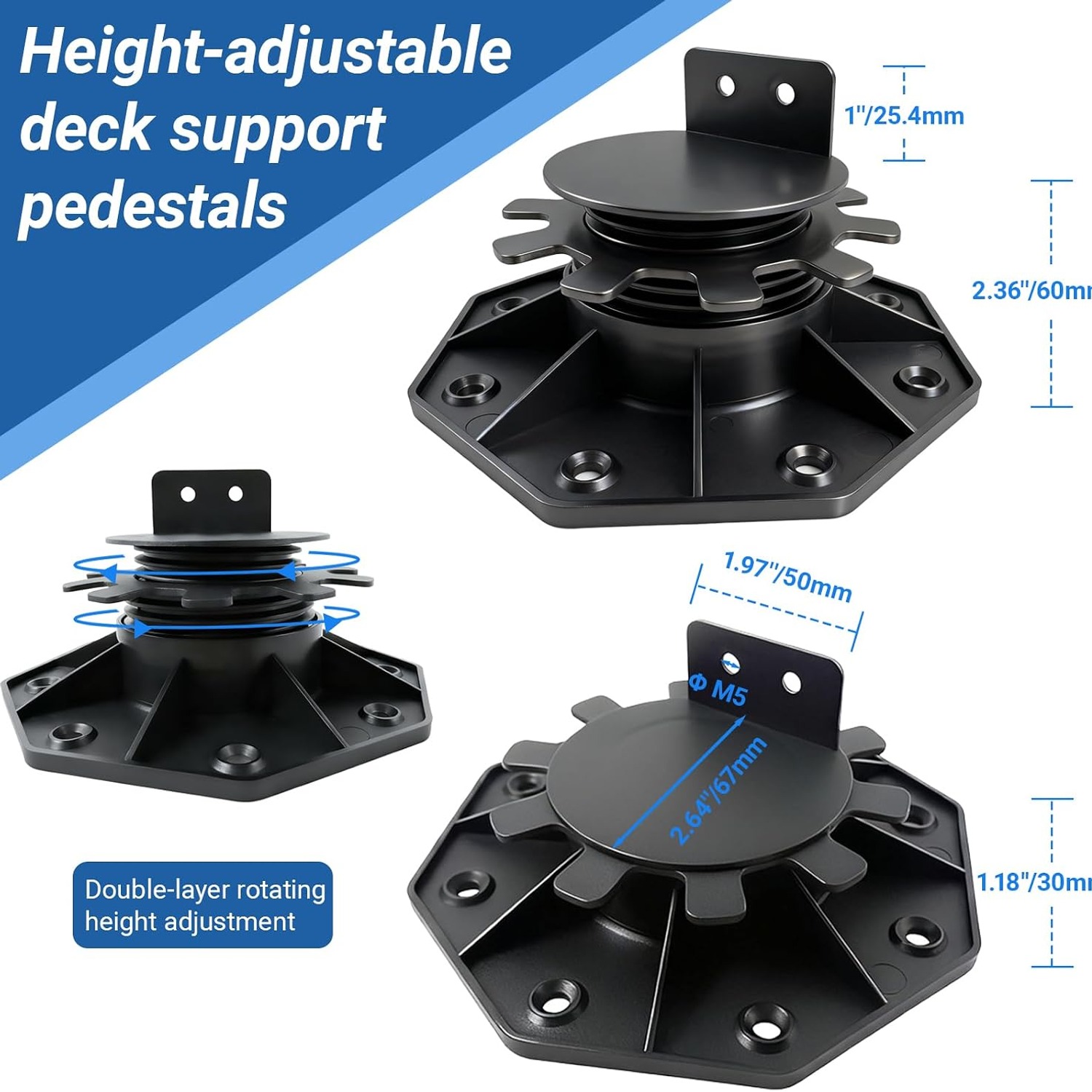
Height Range30mm to 60mm (adjustable)
ColourBlack
Package Dimensions25 x 25 x 22.2 cm
Weight1.36 kg
Included Components12 deck blocks
Country of OriginChina
Weight1.36 kg
Shipping & returns

Tracked delivery anywhere in South Africa. It is free on orders of R600 or more, and a flat R250 below that.

If it is not right for you, send it back within 14 days of delivery in resaleable condition and we refund the price you paid, including standard delivery. That is a voluntary policy we offer on top of your legal rights. You cover the cost of returning it unless the item is faulty.

If it arrives faulty, damaged or not as described, we put it right at no cost to you under the Consumer Protection Act 68 of 2008, return postage included.

Shipping details · Refunds and returns

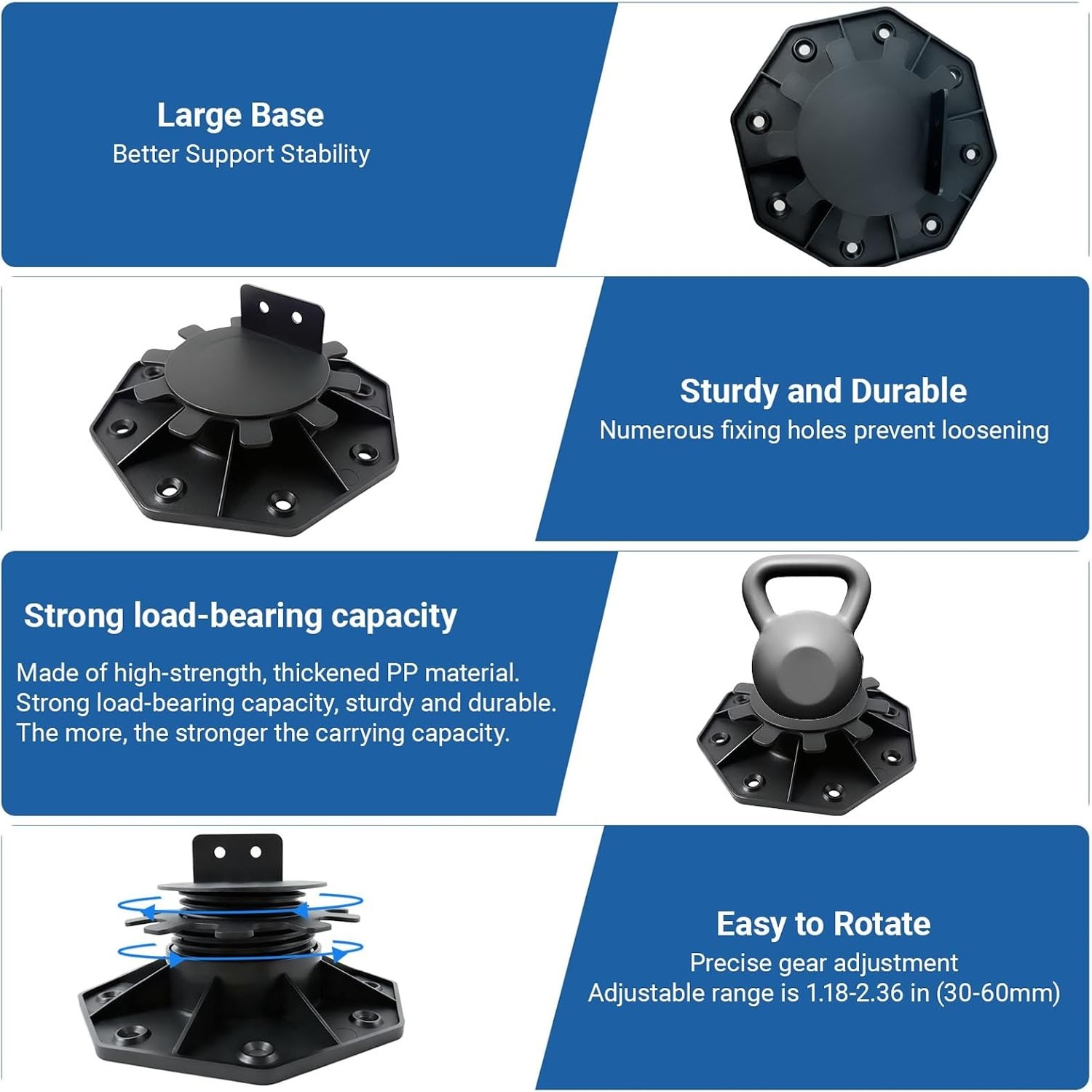
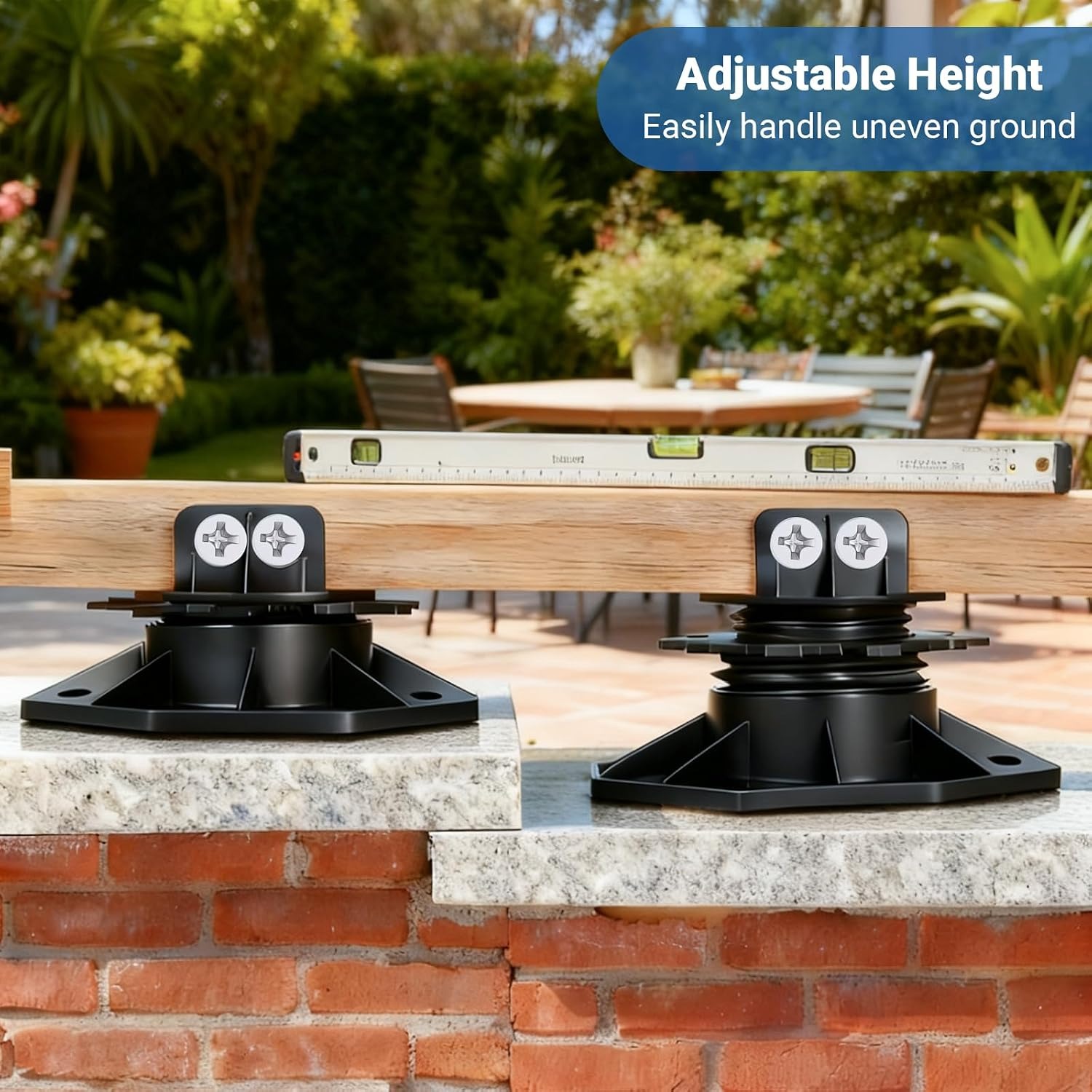
Twists To SuitFine height tuning from 30mm to 60mm, even after the frame is down.
Weather ToughHigh-strength PP that resists corrosion and oxidation outdoors.
Rounded BaseCurved footing spreads load and helps stop the deck swaying.
Screw And GoFix straight through the top plate into your joist, no concrete needed.

Get a level, free-draining low deck without pouring a single concrete pier, using adjustable deck pedestals that twist to the exact height you need with deck support blocks.

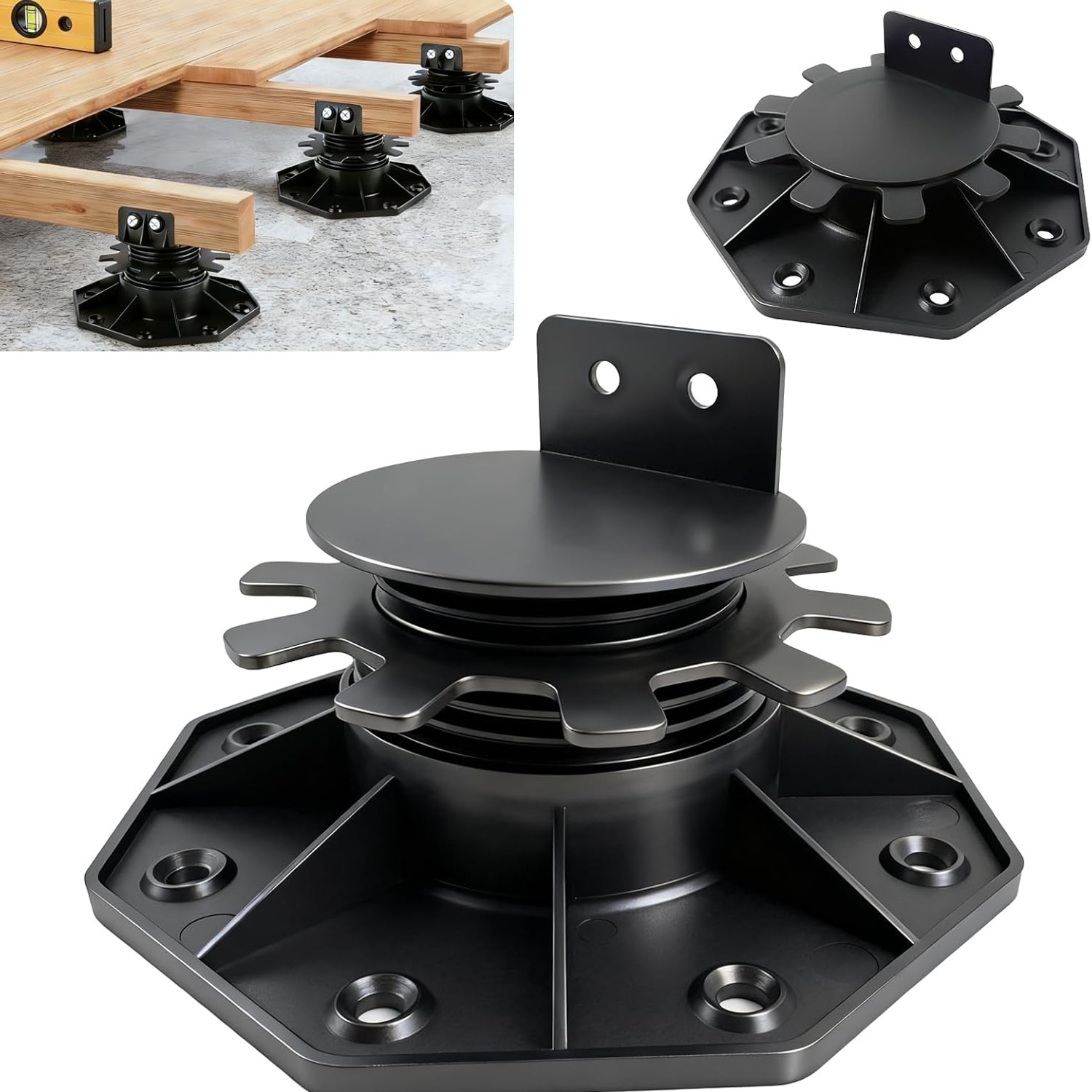
Twelve height-adjustable deck support blocks in high-strength PP, tuneable from 30mm to 60mm, with a screw-fixed top plate and a rounded base that spreads load and resists swaying.

Twelve adjustable deck support blocks that let you level a low deck, patio section or shed floor by hand instead of pouring concrete piers.

Each pedestal winds between 30mm and 60mm, so you can chase out dips in the ground and keep the frame true.

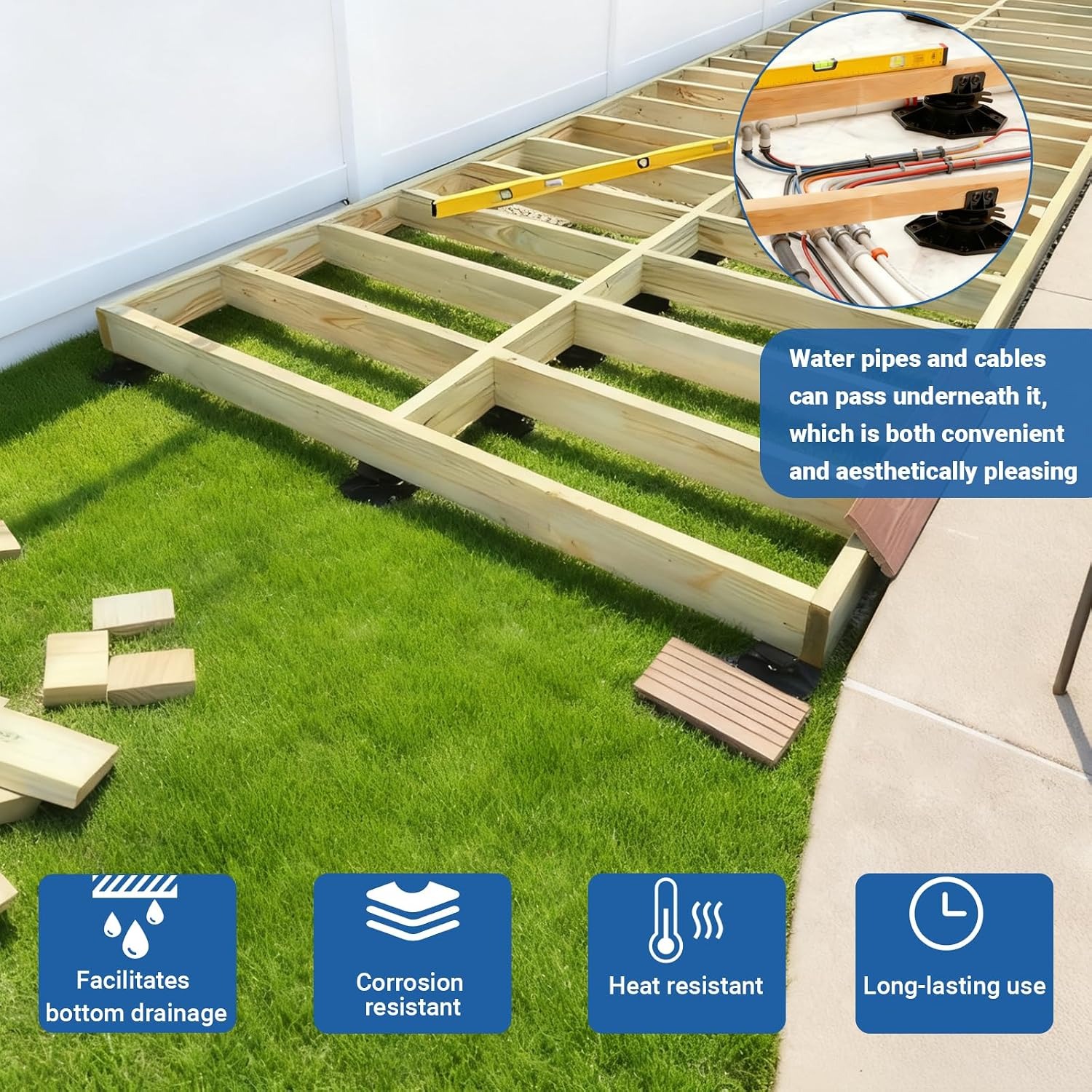
The moulded high-strength PP body is made for outdoor life, with good corrosion and oxidation resistance in sun, rain and frost.

A rounded base spreads the load into the ground while the flat top plate takes screws straight into timber or composite joists.

Works under treated timber, WPC decking joists, stone, mesh flooring, greenhouse floors and pipe runs.

Adjustable Deck Pedestals 12 Pack (30-60mm)

Low decks are deceptively fiddly. The timber is cheap enough, the fixings are easy, and then you discover that the ground under your deck is nothing like flat. Packing with offcuts and pavers works for a weekend and sags by autumn. These adjustable decking pedestals solve that by putting a small, tuneable screw jack under the frame at every point you need one, so levelling becomes a twist of the wrist rather than a dig-and-pack exercise.

Adjustable Deck Pedestals 12 Pack (30-60mm)

Each pedestal adjusts between 30mm and 60mm. That is a deliberately shallow range, which is exactly what you want for a low floating deck, a raised paver run, a walkway or a shed floor where you are chasing out dips rather than building a storey off the ground. Because the thread stays live after installation, you can go back in six months and nudge a corner that has settled without lifting a single board.

Adjustable Deck Pedestals 12 Pack (30-60mm)

The body is moulded from high-strength PP. That matters outdoors. Timber packers rot, bricks crumble, and steel rusts where it sits in wet soil. This plastic is made to resist corrosion and oxidation, and the maker states it is not easily deformed, aged or cracked after long exposure to sunlight, rain and frost. In termite country, a plastic pedestal also removes one more piece of timber from ground contact.

Adjustable Deck Pedestals 12 Pack (30-60mm)

Fixing is deliberately simple. The top plate carries small holes, so you drive screws through the plate and into the joist above to lock everything together. The rounded base below spreads load into the ground or onto a paver, which helps the whole run stay steady and resists the tilt and sway that plague decks packed on loose rubble. No formwork, no curing time, no wheelbarrow of concrete.

Adjustable Deck Pedestals 12 Pack (30-60mm)

Lifting the frame off the dirt also buys you airflow and drainage. Water runs away instead of sitting against the underside of your boards, which is the single most common reason low decks go soft early. You get a small amount of usable space under the deck as well, handy for hoses, drainage lines or conduit. They are a straightforward alternative to concrete piers and short timber posts on plenty of residential jobs.

Not sure yet? That is fine.

Fibre, weight and colour are hard to judge from a photograph, and a piece has to feel right in the hand. If it is not right for you, send it back within 14 days of delivery in resaleable condition and we refund the price you paid, including standard delivery. That is on top of your rights under the Consumer Protection Act 68 of 2008 if anything arrives faulty.

If it turns up faulty, damaged or not as described, that is on us. The Consumer Protection Act 68 of 2008 covers you, and we pay the return postage. Read the full detail on our refunds and returns page, or ask us anything before you order.

Frequently Asked Questions

What exactly is in the pack?

You get twelve adjustable deck support blocks in one box. Each one is a separate pedestal that winds up and down on its own. The listed pack weight is 1.36 kg.

How much height adjustment do I get?

Each pedestal adjusts from 30mm to 60mm, which is roughly 1.2 to 2.4 inches. That range is designed for low decks and levelling out dips rather than building a tall structure. If you need more lift than 60mm, these are not the right support.

Can I adjust them after the deck is built?

Yes, and that is one of the main reasons people choose adjustable decking pedestals. The thread stays usable once installed, so you can re-level a corner if the ground settles. You may need access from the side or from underneath to reach the pedestal.

What are they made from?

The pedestals are moulded from high-strength PP, a tough outdoor plastic. The maker states it resists corrosion and oxidation and does not easily deform, age or crack after long exposure to sun, rain and frost. No other material is specified in this record.

What load can one pedestal carry?

The maker does not publish a load rating in kilograms for this product, so we will not quote one. They describe the base as having strong load-bearing capacity with a rounded bottom that adds stability. For anything structural or load-critical, check with a local builder or engineer.

How many pedestals do I need per square metre?

That depends on your joist spacing, board thickness and the span between supports. As a rough starting point, many low deck builds place supports every 400mm to 600mm along each joist. Work out your spacing first, then buy packs to suit.

Do they work with composite decking?

Yes. They are listed as compatible with WPC flooring joists as well as outdoor treated timber. You are fixing to the joist, not to the board, so the board material matters less than the frame.

Will they sit on grass or soil?

They can, but bare soil is not ideal long term because it moves. Most people sit each pedestal on a paver, a compacted gravel pad or a concrete slab so the base has something firm to push against. That also makes the low deck support system much more stable over time.

Can I use them on a concrete slab or existing patio?

Yes, that is one of the easiest applications. The flat slab gives the rounded base a consistent surface and you simply wind each pedestal to bring the frame level. This is a common approach for adjustable patio pedestals setups over old concrete.

How do I attach them to my joists?

Screws pass through the small holes in the upper plate and into the timber or composite joist above. That locks the pedestal to the frame so the whole assembly moves as one piece. Use outdoor-rated fixings of a length suited to your joist thickness.

Are screws included?

The listed included components are twelve deck blocks only. Plan to supply your own exterior-grade screws to suit your joists. Stainless or hot-dip galvanised fixings are a sensible choice outdoors.

Do I need concrete footings as well?

Not necessarily for a low floating deck. These are promoted as an alternative to traditional concrete piers and short timber posts. For anything attached to a building, elevated, or covered by local building rules, check your requirements before you start.

Will they stop my deck from wobbling?

A properly supported and screwed-down frame on firm ground is far more stable than one packed with offcuts. The rounded base is designed to resist tilting and swaying. Wobble usually comes from the base sinking or from too few supports, so get the spacing right.

Can I use them under a shed floor?

Yes, shed floors are a listed application. Lifting the floor frame off the ground helps air circulate and keeps water from sitting against the timber. For many people this is a practical shed floor supports approach because you can level it in minutes.

Are they suitable for pavers and stone?

They are listed as compatible with various types of stone as well as timber and WPC joists. For loose paver work you normally sit the paver on a frame or plate rather than directly on the pedestal head. Check your paver thickness and support spacing first.

Will they rot or rust?

Plastic does not rot and does not rust, which is the point. The maker states the high-strength material will not rust or crack in normal use. That removes a maintenance task compared with timber packers or steel brackets.

Do termites bother them?

Termites eat timber, not PP plastic. Using pedestals instead of short timber posts takes one more food source out of ground contact. You should still keep soil and mulch clear of any timber in the frame above.

How do they help with drainage?

Lifting the frame creates an air gap so rain runs away rather than pooling under the boards. That airflow dries the underside of the deck faster after a storm. Keeping leaf litter cleared out of that gap matters just as much.

Can I use them on sloping ground?

You can take out a gentle fall of up to 30mm across the adjustment range of a single pedestal. For a bigger slope you would need to bench the ground, step the frame, or pack under the pedestals with pavers. They are best thought of as fine levellers, not a slope solution on their own.

What is the colour?

The listed colour is black. A dark pedestal is a sensible choice because it disappears into the shadow under a deck. No other finishes are listed in this record.

How big is the pack when it arrives?

The listed package dimensions are 25 x 25 x 22.2 cm with a weight of 1.36 kg. That makes it a compact box, easy to carry and easy to store until you are ready to build.

Do I need any special tools?

No. A drill or driver for the screws and a spirit level or string line are the basics. Adjusting the pedestal height is done by hand.

How do I get the whole deck level?

Set a string line or long level across the frame, start from the highest point, then wind each pedestal up to meet the line. Work across the deck rather than down one side. Check diagonals once you think it is right.

Do they need maintenance?

Very little. The maker notes no maintenance is required in use. A sensible habit is to clear debris from under the deck and re-check level after the first wet season.

How do I clean them?

Rinse with fresh water to clear grit from the threads before you install them. Once they are in service, keeping the ground around them clear is the main job. Avoid solvents and harsh cleaners on the plastic.

Can I buy more than one pack?

Yes. Most deck builds need more than twelve supports, so people commonly order several packs. Work out your support count from your joist layout before ordering.

Are these good for a multi-level deck?

Multi-level decks are listed as a suitable application. The adjustability lets you fine-tune each landing so the steps between levels stay even. Each level still needs its own correctly spaced supports.

Do they suit a greenhouse or walkway floor?

Yes, greenhouse flooring, walkways and engineered mesh flooring are all listed applications. The ability to level a floor over uneven ground is the main benefit in those situations. The low 30-60mm range keeps the step-up small.

How long will delivery take?

Delivery times vary by country and your delivery address. You will see the estimate at checkout, and tracking follows once the order is dispatched. Remote areas usually take a little longer.

What if they are not right for my job?

If the height range does not suit, or the pack is not what you expected, get in touch and we will sort out a return or exchange under our returns policy. Keep the pedestals and packaging in resaleable condition if you think you might send them back. It is worth measuring your required lift before you start fixing anything down.

Adjustable Deck Pedestals, A Practical Buyer's Guide For Low Decks

6 min read Decking Pedestal Company

The problem with low decks

Building a low deck looks simple until you lay the first joist and realise the ground underneath is a landscape of humps and hollows. Nothing in a backyard is flat. The dirt near the house has usually been built up, the far corner has settled, and somewhere in the middle there is a tree root doing its own thing.

The traditional answers are slow or temporary. Pouring concrete piers means digging holes, mixing, waiting for it to cure, and then discovering your string line was 10mm out. Packing the frame with offcuts, bricks and bits of paver is quick, but those packers slip, rot, crush or sink. A deck built on packers feels fine in week one and squeaks like a floorboard in a haunted house by the following winter.

Adjustable deck pedestals sit between those two options. Each one is a small screw jack. You place it, wind it to the height you want, screw the frame to the top plate, and move on. The whole job of getting a deck level becomes a twist rather than a dig.

How these pedestals work

Each pedestal in this pack is a two-part moulded unit that winds between 30mm and 60mm. The base is rounded underneath, which spreads the load into whatever it is sitting on and helps the pedestal stay steady instead of rocking on a point. The top is a flat plate with small holes drilled through it.

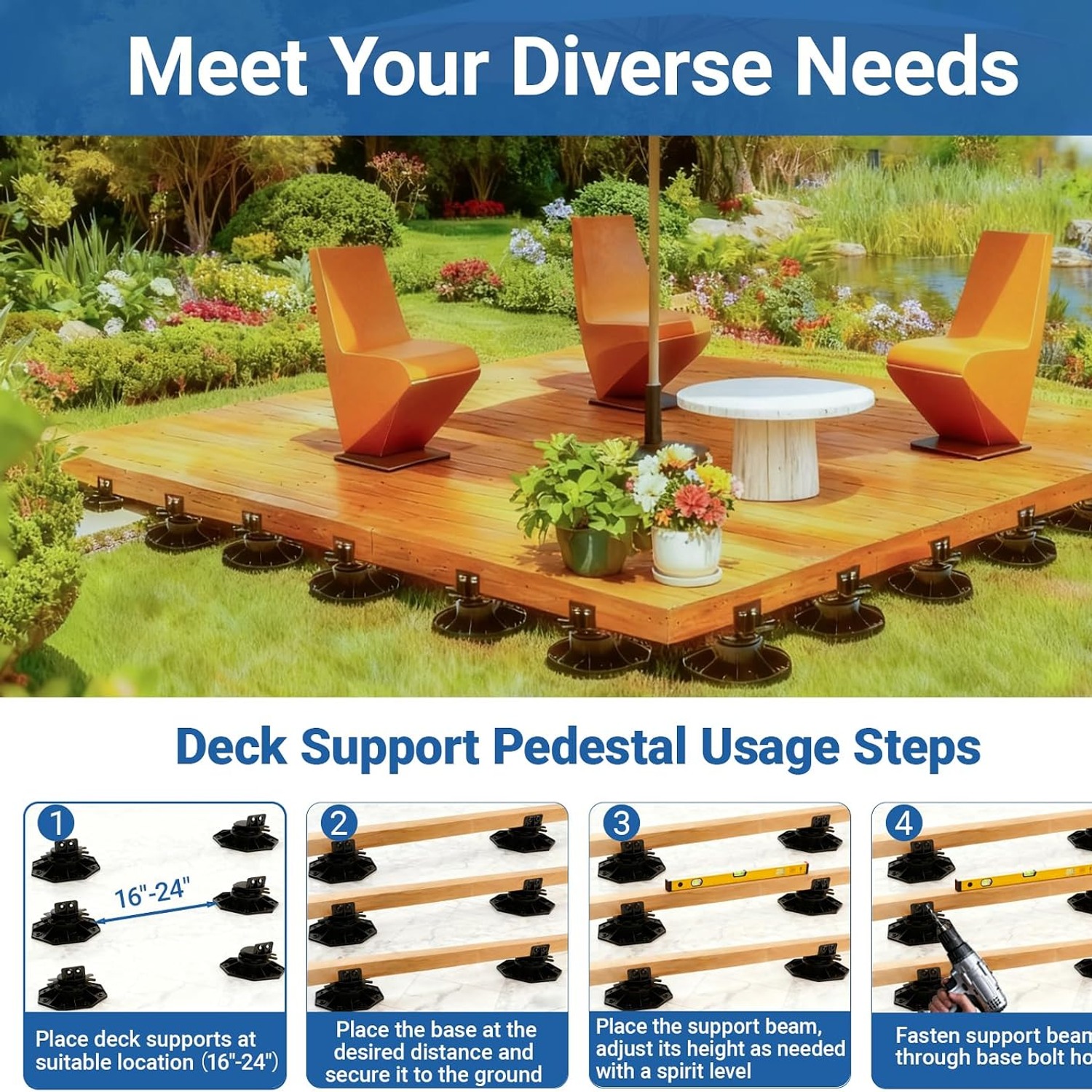
You set the pedestals out under your frame, wind them roughly to height, drop the joists on, then fine-tune. Once everything reads level, screws go through the holes in the top plate and up into the joist. That single step is what turns a stack of parts into a structure, because the deck and the supports now move as one piece rather than sliding past each other.

The 30-60mm range is deliberately shallow. These are made for low floating decks, patio top-ups, walkways, shed floors and raised mesh or greenhouse floors. If you want to stand a deck half a metre off the ground, you are looking at a different product entirely. If you want a deck that sits just clear of the dirt with airflow underneath, this range is right in the sweet spot.

The material is high-strength PP. The maker says it resists corrosion and oxidation and holds its shape under long exposure to sun, rain and frost without deforming, ageing or cracking. Plastic has a real advantage in ground contact. It does not rot like timber, it does not rust like steel, and termites have no interest in it.

Who these suit

They suit the person building a small to mid-size low deck over soil, gravel or an old slab. They suit anyone putting down a shed floor and wanting it level without laying a new concrete pad. They suit walkway projects across uneven ground, and they suit people topping an ugly but sound existing patio with timber or composite boards.

They also suit anyone who has already built something and watched it settle. Because the thread stays live after installation, you can go back and re-level a sagging corner without pulling boards up. That is a feature you only truly appreciate the second summer.

They are less suited to high decks, decks that carry heavy fixed loads like spas, or anything that falls under building approval where an engineer has specified footings. The maker does not publish a kilogram load rating for these pedestals, and we are not going to invent one. If your project is structural, get local advice.

Working out how many you need

This is where most people under-order. The number of pedestals comes from your joist layout, not from the deck's area.

Start with your board thickness, because that sets how far your joists can span. Thin boards want closer joists. Then set your joist spacing, commonly 400mm to 600mm centres on residential low decks. Then decide how often you will support each joist along its length. Multiply those numbers out and you have your pedestal count.

A quick worked example. A deck three metres by three metres, with joists at 450mm centres, gives you roughly seven joists. Supporting each of those every 600mm along its three metre run means about six supports per joist. That is forty-two pedestals, or four packs of twelve. People who buy one pack for a three by three deck end up making a second order.

It is worth laying it out on paper, or chalking it on the slab, before you buy. The strongest deck support blocks in the world will not help if there are not enough of them.

Ground preparation still matters

A pedestal transfers load down into whatever is under it. If that is loose soil, the pedestal will eventually press into the soil and your lovely level deck will develop a dip.

The usual fix is simple. Sit each pedestal on a paver, a small compacted gravel pad or an existing concrete surface. That gives the rounded base a firm, broad bearing area. On a slab or old patio you can skip this entirely and place the pedestals straight down.

Do not sit them in a hollow where water collects. Standing water will not harm the plastic, but it will soften the soil underneath and move the whole thing. Shape the ground so water drains away, then set your supports.

Getting it level

Work from the highest point of your ground, not from one edge. If you start at a low corner you will run out of adjustment on the high side and have to start again.

Run a string line or a long straight edge across the frame. Wind the pedestals under that line until each joist sits true. Check across the deck as well as along it, then check the diagonals. On a small deck a two metre level will do the job. On anything bigger, a string line and a water level or laser is faster and more honest.

Once you are happy, screw the top plates to the joists. Use exterior-grade fixings. Stainless or hot-dip galvanised screws are worth the extra few dollars outdoors, because a rusting screw head is a nasty thing to find in a timber joist in three years.

Drainage, airflow and the long game

The real reason low decks fail early is water. Boards that sit against damp ground never dry out. The underside stays wet, the timber softens, and the whole thing goes spongy while the top surface still looks fine.

Lifting the frame even 30mm changes that. Air moves under the boards, water runs away rather than pooling, and the timber dries after rain instead of staying damp for days. That small gap is also handy for running a hose line, a drainage pipe or some conduit.

The one maintenance job that matters is clearing out leaf litter. A deck on pedestals with 40mm of compacted leaves underneath has no airflow at all, so you have spent money for nothing. Blow it out or hose it through once or twice a year.

Care and checking in

There is almost nothing to do with the pedestals themselves. Rinse grit out of the threads before you install so they wind smoothly. After that, leave them alone.

The habit worth building is a check after the first wet season. Ground moves most in its first year under a new load. Walk the deck, feel for any soft or bouncy spot, and wind the relevant pedestal up a turn or two if you find one. Five minutes then saves a rebuild later.

Avoid solvents and strong cleaners on the plastic. Soap and water is all it ever needs.

The short version

These are twelve adjustable support blocks that wind between 30mm and 60mm, made from a tough outdoor PP, with a rounded base for stability and a drilled top plate so you can screw them to your joists. They turn levelling a low deck from a digging job into a twisting job, and they stay adjustable long after the boards are down.

Buy enough of them, sit them on something firm, screw them to the frame properly, and clear the leaves out once a year. Do those four things and you will have a deck that stays flat and dry for a very long time.

Browse the shop

Not sure how many you need?

Work out your joist spacing first, then order the packs to match, and ask us if you would like a hand checking the numbers.

Ask us a question

Page summary

The Adjustable Deck Pedestals 12 Pack is a set of twelve height-adjustable deck support blocks supplied in black. Each pedestal adjusts between 30mm and 60mm to level low decks, patios, walkways, multi-level decks and shed floors. The body is moulded from high-strength PP, described by the maker as corrosion and oxidation resistant and resistant to deforming, ageing or cracking under sun, rain and frost. A rounded base spreads load, and the flat top plate has holes for screwing directly to joists. Packaged dimensions are 25 x 25 x 22.2 cm and the pack weighs 1.36 kg. Country of origin is China. No load rating in kilograms is specified in this record, and colour and material fields beyond PP are not specified.